
Urgent Care. Masterful Precision.
Restoring Your Identity & Function.
Facial trauma is overwhelming. Board-Certified Plastic Surgeon Dr. Pawan Shahane specializes in the advanced repair of facial fractures and complex soft-tissue injuries, prioritizing perfect functional recovery and invisible scarring.
Emergency Trauma ContactBeyond Just "Fixing the Bone."
Injuries to the face, whether from road traffic accidents, sports injuries, or falls, carry a high emotional and physical toll. The face is not just a structure; it is how the world recognizes you. It houses critical functions like your ability to see, breathe, chew, and speak.
In an emergency room, the primary goal is often just to stabilize the patient. However, for facial injuries, the expertise of an M.Ch. Plastic Surgeon is crucial. Dr. Pawan Shahane approaches maxillofacial trauma with a dual perspective: restoring the precise, complex anatomy of the facial skeleton while utilizing elite aesthetic techniques to ensure scars are hidden and your appearance is preserved.
Comprehensive Maxillofacial Repair
Treating the complex architecture of the facial skeleton.
Mandibular (Jaw) Fractures
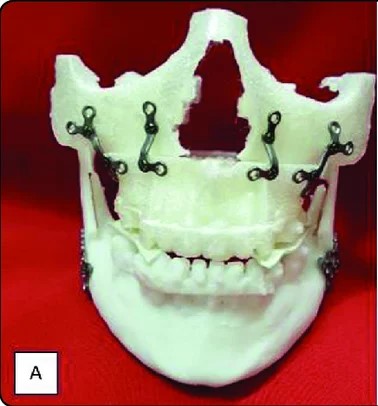
The most common facial fracture. A broken lower jaw affects your bite and ability to eat. We use advanced internal fixation (titanium plates) to perfectly realign the teeth and stabilize the jaw, often avoiding the need to wire the mouth shut.
Orbital (Eye Socket) Blowouts
Blunt trauma can shatter the delicate bones surrounding the eye, potentially causing double vision or a sunken appearance. We meticulously reconstruct the orbital floor using micro-meshes to safely support the eye globe.
Zygomatic (Cheekbone) Fractures
Impact to the side of the face can fracture the cheekbone, leading to facial flattening and difficulty opening the mouth. We restore the 3D projection of the cheek using specialized mini-plate osteosynthesis.
Nasal Bone Fractures
Beyond cosmetic distortion, a broken nose can severely impair breathing. We perform precise closed or open reduction to restore the airway and the aesthetic contour of the nasal bridge.
Panfacial Trauma
In severe accidents where multiple facial bones are shattered, Dr. Pawan utilizes advanced 3D CT scanning and custom-printed surgical guides to rebuild the facial framework from the bottom up.
Complex Soft Tissue Lacerations
Deep cuts to the face involve nerves, tear ducts, and salivary glands. We perform microscopic repair of these vital structures and close the skin using ultra-fine plastic surgery suturing to minimize scarring.
Advanced Fixation Technology
Modern facial trauma surgery has evolved far beyond wiring jaws shut. We utilize the global gold standards in craniofacial repair.
Titanium Mini-Plates & Screws
Instead of external wires, we use bio-compatible titanium mini-plates. These are permanently fixed to the broken bones under the skin, holding them rigidly in place. This allows you to open your mouth and begin a soft diet almost immediately.
3D Pre-Surgical Planning
For complex, shattered bones, we convert your CT scan into a 3D digital model. This allows Dr. Pawan to perform a "virtual surgery" before you enter the operating room, ensuring absolute precision.
Micro-Nerve Repair
If facial lacerations have severed the delicate branches of the facial nerve (which controls facial expressions), Dr. Pawan utilizes surgical microscopes and micro-sutures to reattach them, preventing facial paralysis.
The "Hidden Scar" Approach
The hallmark of a Plastic Surgeon treating facial trauma is access. To repair fractured cheekbones, jaws, or eye sockets, Dr. Pawan does not cut across the skin of the face. Instead, he reaches the broken bones through **intraoral incisions** (cuts made entirely inside the mouth) or by hiding microscopic incisions inside the lower eyelid or behind the hairline. This guarantees that your facial bones are fixed without leaving visible surgical scars on your face.