
Hematological High-Risk Care
Navigating Pregnancy with Blood Disorders.
Conditions like Sickle Cell Disease and Thalassemia require a highly proactive approach. Dr. Kunda Shahane provides the advanced genetic screening and precise fetal blood flow monitoring needed to protect your baby from severe anemia and ensure a safe delivery.
Schedule Fetal AssessmentExpert Care for Complex Conditions.
Hemoglobinopathies, such as Sickle Cell and Thalassemia, are inherited blood disorders that affect how oxygen is carried through the body. Because pregnancy naturally places an immense demand on a mother's blood volume and heart, having one of these conditions automatically makes your pregnancy High-Risk.
Our role in Fetal Medicine is two-fold. First, we provide clarity on the genetic risk to your baby. Second, we utilize non-invasive, high-definition Doppler ultrasound to monitor the baby's blood flow and growth in real-time. By tracking the baby's health at a microscopic level, we can intercept complications long before they become emergencies.
The Genetic Link: Trait vs. Disease
If you have been diagnosed with a Sickle Cell or Thalassemia "Trait" (Carrier), you likely have no severe symptoms yourself, but you carry the gene. The most crucial first step is to test your partner via an HPLC blood test.
If both parents are carriers, there is a 25% chance in every pregnancy that the baby will be born with the full disease (e.g., Sickle Cell Anemia or Thalassemia Major). In these cases, Dr. Kunda Shahane provides expert genetic counseling and can perform diagnostic testing (like CVS or Amniocentesis) early in the pregnancy to determine the baby's exact genetic status.
The Conditions We Actively Monitor
Our advanced diagnostic scans specifically look for how maternal blood disorders affect the fetal environment.
Fetal Anemia
If a baby is severely affected by Alpha Thalassemia, they can develop profound, life-threatening anemia in the womb. We use highly specialized ultrasound to detect this early, allowing for potential life-saving interventions like Intrauterine Transfusions (IUT).
Fetal Growth Restriction (FGR)
Mothers with Sickle Cell Disease often experience "sickling" in the tiny blood vessels of the placenta. This can reduce the oxygen and nutrients reaching the baby, leading to restricted growth. We measure the baby's size and placental health meticulously.
Pre-Eclampsia Risk
Mothers with hemoglobin disorders have a significantly elevated risk of developing high blood pressure and pre-eclampsia. We perform detailed Uterine Artery Doppler scans in the first trimester to predict this risk and initiate preventative care with your obstetrician.
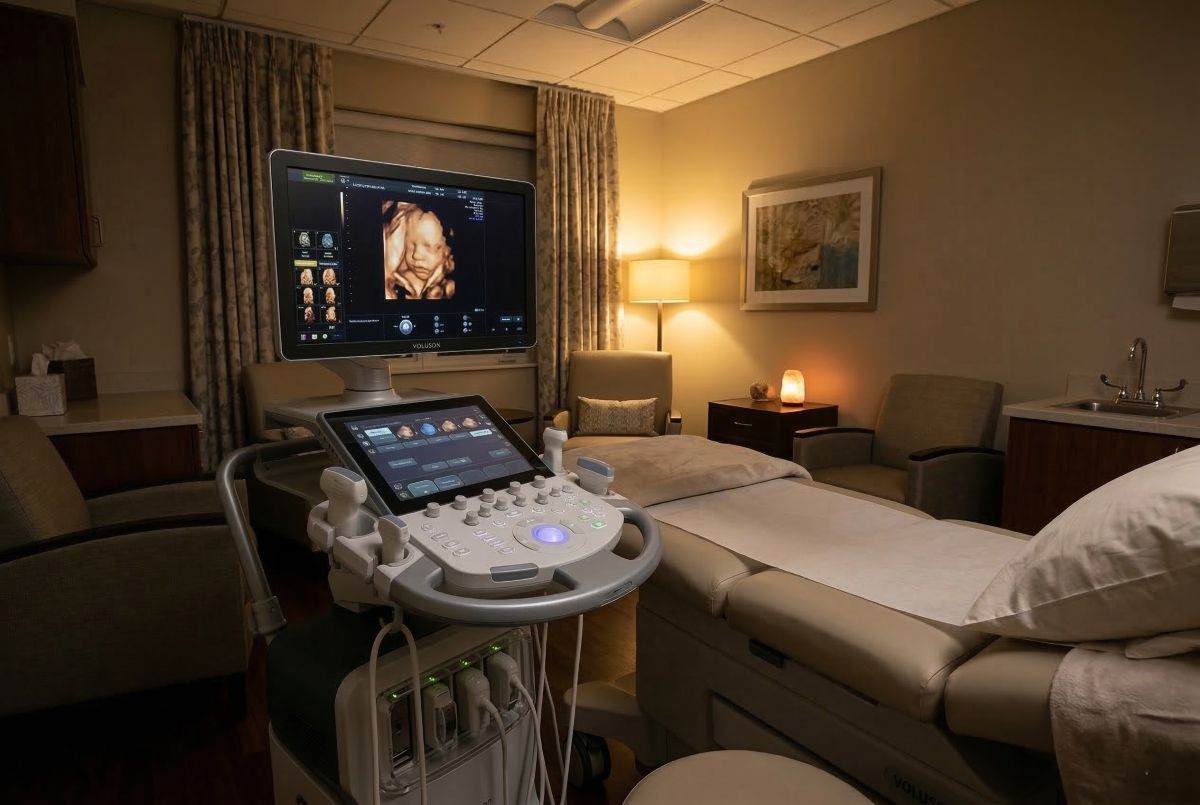
The Non-Invasive MCA Doppler
Historically, detecting fetal anemia required inserting a needle into the womb to draw the baby's blood. Today, Dr. Kunda Shahane uses the absolute gold-standard in Fetal Medicine: The MCA Doppler.
How It Works
Using high-resolution ultrasound, we locate the Middle Cerebral Artery (MCA) inside the baby's brain. We then measure the Peak Systolic Velocity (PSV)—how fast the blood is moving through that specific artery.
Why It Is Revolutionary
If a baby is anemic (lacking red blood cells), their blood becomes thinner and their heart pumps faster to distribute oxygen, causing the blood in the brain to travel at a much higher velocity. By simply measuring this speed from the outside, we can accurately diagnose fetal anemia without a single needle.
Serial Surveillance
For high-risk mothers, we perform this MCA Doppler scan, alongside regular growth checks, every 2 to 4 weeks during the second and third trimesters to ensure the baby remains safe.