
Advanced In-Utero Care
Treating Your Baby Before Birth.
The womb is no longer a barrier to life-saving treatment. Dr. Kunda Shahane provides state-of-the-art fetal medical and surgical interventions to protect and heal your baby while still in-utero.
Speak With Our Care CoordinatorYour Baby is an Independent Patient.
Hearing that your unborn baby has a medical complication is one of the most terrifying moments a parent can experience. Historically, doctors had to wait until a baby was born to provide treatment. Today, advanced "Fetal Therapy" allows us to intervene safely and effectively inside the womb.
Dr. Kunda Shahane utilizes high-resolution, continuous ultrasound guidance to perform minimally invasive procedures. From delivering life-saving blood transfusions through the umbilical cord to draining fluid from delicate organs, our priority is securing a healthy outcome for both mother and child.
Specialized Interventions
Advanced diagnostic and therapeutic procedures performed in-utero.
Intrauterine Transfusion (IUT)
If a baby develops severe anemia inside the womb (often due to Rh isoimmunization or parvovirus), Dr. Kunda can safely deliver compatible, life-saving blood directly into the baby’s umbilical cord vein under continuous ultrasound guidance.
Fetal Shunt Placement
Sometimes, fluid accumulates dangerously in a baby's chest (pleural effusion) or abdomen (ascites), threatening lung development or heart function. We place a tiny tube (shunt) to constantly drain this fluid into the amniotic sac until birth.
Multifetal Pregnancy Reduction (MFPR)
In cases of higher-order multiples (triplets, quadruplets), the risk of extreme prematurity and maternal complications is very high. MFPR is a highly delicate, safe procedure to reduce the number of fetuses, greatly improving the survival chances of the remaining babies.
Amniodrainage & Reduction
Polyhydramnios (excess amniotic fluid) can cause severe maternal discomfort, breathing difficulties, and trigger premature labor. We use precise ultrasound guidance to safely drain the excess fluid, relieving pressure and prolonging the pregnancy.
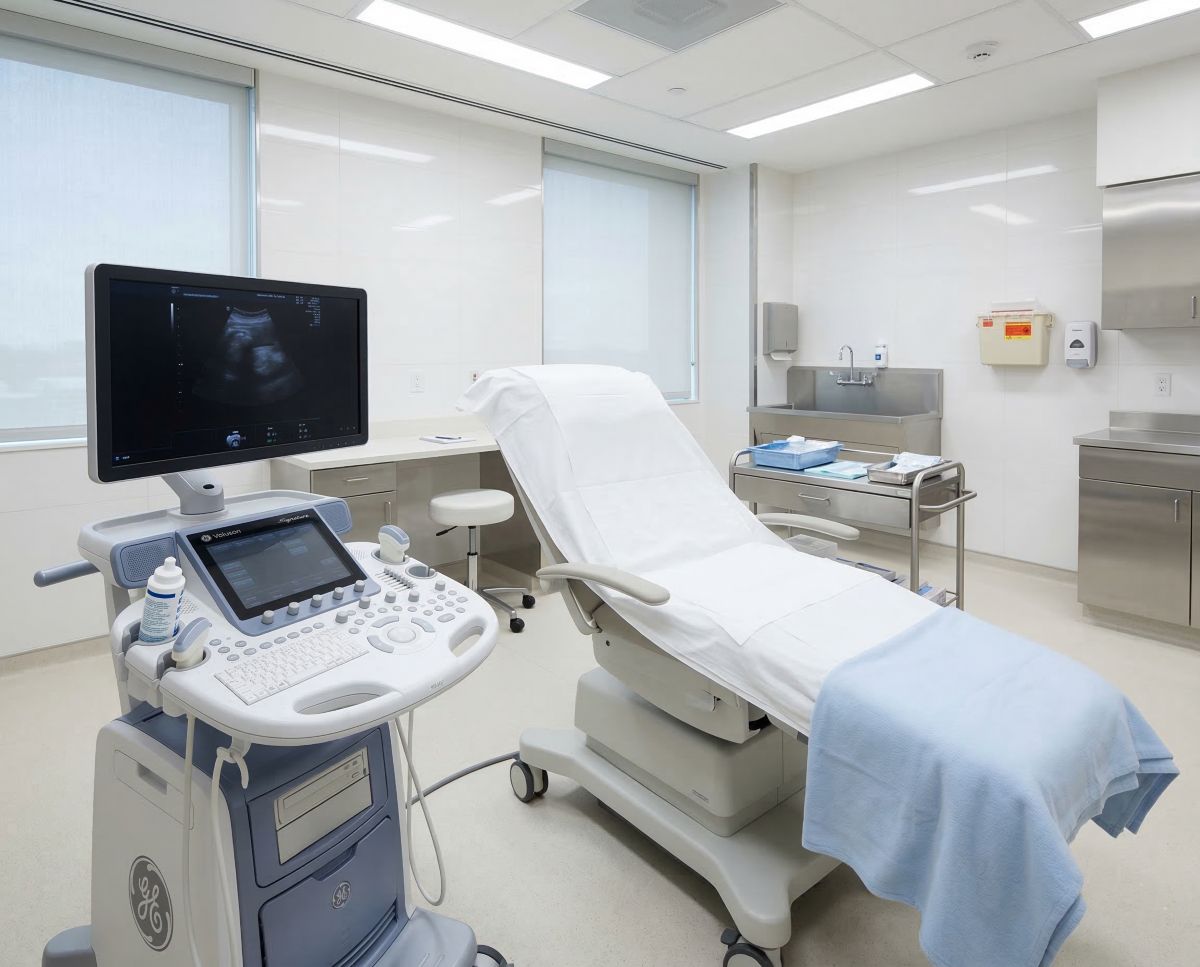
Precision Meets Compassion
Fetal interventions require millimeter accuracy. We utilize the absolute highest standard of Voluson ultrasound technology to visualize the baby, the placenta, and the umbilical cord in real-time during every second of the procedure.
Minimally Invasive
Almost all fetal therapies are performed using very fine needles passing through the maternal abdomen. There are no large surgical cuts, meaning a faster, safer recovery for the mother.
Local Anesthesia
To ensure maternal comfort, the skin and abdominal wall are numbed with local anesthesia. The mother remains awake and closely monitored by our dedicated fetal care team throughout the procedure.
Continuous Fetal Monitoring
The baby's heart rate, blood flow (Doppler), and movements are constantly tracked before, during, and after the intervention to ensure absolute safety and immediate response.