
High-Risk Maternal Care
Safeguarding Your Baby's Growth in Diabetic Pregnancies.
Whether you developed Gestational Diabetes during pregnancy or had pre-existing Type 1 or Type 2, fluctuating blood sugar directly impacts your baby’s development. Dr. Kunda Shahane provides the expert fetal surveillance necessary to ensure a safe, healthy delivery.
Schedule Fetal AssessmentYou Have Diabetes. Your Baby Does Not Have To Suffer.
Hearing a diagnosis of Diabetes in pregnancy can be frightening. Mothers often immediately worry about how their blood sugar is affecting their unborn child. The truth is, when meticulously monitored and managed, mothers with diabetes can—and routinely do—deliver perfectly healthy babies.
However, diabetes fundamentally alters the uterine environment. Excess glucose in your blood crosses the placenta to the baby, prompting the baby's pancreas to produce extra insulin. This can lead to abnormal growth patterns, fluid imbalances, and cardiac stress. As a Fetal Medicine Specialist, Dr. Kunda utilizes high-definition ultrasound to catch these subtle changes long before they become emergencies.
Gestational Diabetes (GDM)
This condition develops during pregnancy, typically diagnosed between 24 and 28 weeks. Because it occurs after the baby's major organs have already formed, the primary risk is not structural birth defects, but rather the baby growing excessively large (macrosomia) due to the influx of maternal sugar.
Pre-existing Diabetes (Type 1 or 2)
If you had diabetes before conceiving, your blood sugar levels may have been elevated during the crucial first 8 weeks of pregnancy when the baby's organs were forming. This carries a higher risk of structural anomalies, specifically congenital heart defects, requiring earlier and more intense screening.
Conditions We Actively Screen For
Our advanced scans are specifically tailored to monitor the known complications associated with maternal diabetes.
Fetal Macrosomia
Excess maternal sugar acts as extra fuel, causing the baby to grow too large, specifically accumulating fat around the shoulders and abdomen. We measure the fetal abdominal circumference (AC) meticulously to prevent difficult, traumatic deliveries.
Polyhydramnios
High blood sugar causes the baby to produce excessive amounts of urine, leading to an over-accumulation of amniotic fluid. This can stretch the uterus uncomfortably and trigger premature labor. We measure fluid pockets accurately at every scan.
Cardiac Complications
Particularly for mothers with pre-existing Type 1 or 2 diabetes, the risk of the baby developing a thickened heart muscle (hypertrophic cardiomyopathy) or structural heart defects is significantly higher. Dedicated cardiac screening is mandatory.
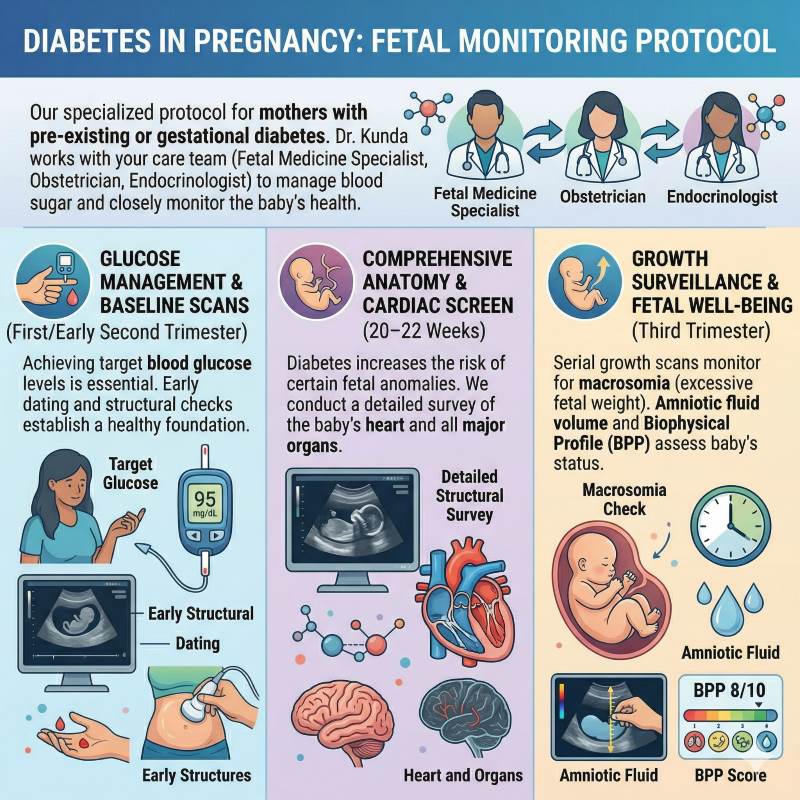
The Diabetic Monitoring Protocol
Dr. Kunda works seamlessly with your primary Obstetrician and Endocrinologist (Diabetologist) to provide the vital fetal data they need to adjust your insulin and diet precisely.
Detailed Structural Scans (First & Second Trimester)
For mothers with pre-existing diabetes, we perform a deeply detailed early structural scan to ensure the brain, spinal cord, and spine formed correctly during the critical first trimester.
Mandatory Fetal Echocardiography (20–24 Weeks)
Because maternal diabetes directly impacts fetal cardiac development, a dedicated Fetal Echo is standard protocol. We meticulously check the heart walls for abnormal thickening and ensure all valves function perfectly.
Serial Growth Scans (Third Trimester)
From 28 weeks onward, you will require ultrasound scans every 2 to 4 weeks. Dr. Kunda carefully plots the baby's growth curve on a graph. If the baby's abdomen is growing disproportionately fast, or if growth slows due to placental aging, we can safely plan your delivery timing.