
Compassionate, High-Risk Care
Safe Pregnancies for Mothers with Hansen's Disease.
Managing Leprosy (Hansen's Disease) during pregnancy requires expert, stigma-free medical support. Dr. Kunda Shahane provides the specialized fetal monitoring needed to ensure your baby grows safely while you receive the care you deserve.
Schedule a Private ConsultationYour Baby is Safe. Let Us Handle the Rest.
For a mother diagnosed with Hansen's Disease (Leprosy), finding out she is pregnant often brings a wave of profound, unfair anxiety. Much of this fear is based on outdated societal stigma, not medical science. We want to be absolutely clear from the beginning: Leprosy does not cross the placenta. You will not pass this infection to your unborn baby.
At Mayflower Clinic, we provide a completely safe, welcoming, and non-judgmental environment. Pregnancy naturally alters a mother's immune system, which can sometimes trigger sudden "reactions" (inflammation) in patients with Hansen's Disease. Our role is to meticulously monitor the baby's growth and the placenta's health, ensuring that your baby remains perfectly insulated while your physician manages your condition.
The Specific Factors We Monitor
Our Fetal Medicine protocols are designed to watch for the indirect effects of maternal inflammation.
Fetal Growth Restriction (FGR)
During a severe immune reaction (like Type 1 or Erythema Nodosum Leprosum - ENL), chronic maternal inflammation can place stress on the placenta. This can occasionally slow the baby's growth rate. We perform serial biometry scans to track the baby's abdominal circumference and weight precisely.
Placental Blood Flow
To ensure the baby's life-support system is functioning optimally, we use Color Doppler ultrasound. By measuring the blood flow resistance in the umbilical cord and uterine arteries, we can detect placental stress long before it affects the baby's health.
Amniotic Fluid Volume
Amniotic fluid is a direct indicator of fetal well-being and kidney function. We monitor the fluid pockets meticulously during the third trimester to ensure the fetal environment remains stable and protective.
Pre-term Labor Risk
Severe maternal illness or high fevers during an inflammatory reaction can sometimes trigger early uterine contractions. We perform cervical length assessments to monitor for signs of premature labor, allowing your obstetrician to intervene if necessary.
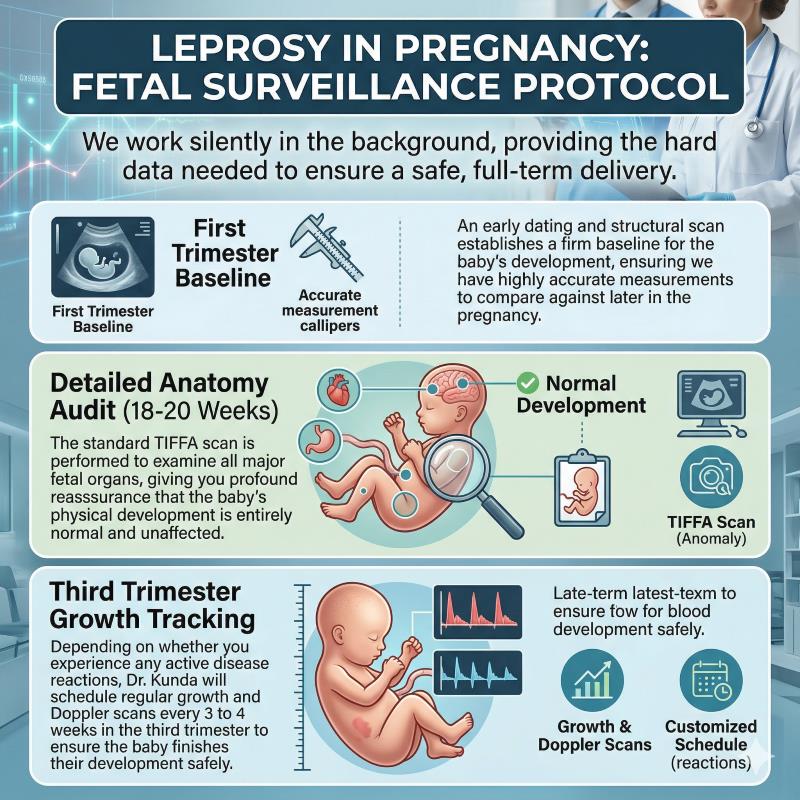
The Surveillance Protocol
We work silently in the background, providing the hard data needed to ensure a safe, full-term delivery.
First Trimester Baseline
An early dating and structural scan establishes a firm baseline for the baby's development, ensuring we have highly accurate measurements to compare against later in the pregnancy.
Detailed Anatomy Audit (18-20 Weeks)
The standard TIFFA scan is performed to examine all major fetal organs, giving you profound reassurance that the baby's physical development is entirely normal and unaffected.
Third Trimester Growth Tracking
Depending on whether you experience any active disease reactions, Dr. Kunda will schedule regular growth and Doppler scans every 3 to 4 weeks in the third trimester to ensure the baby finishes their development safely.